
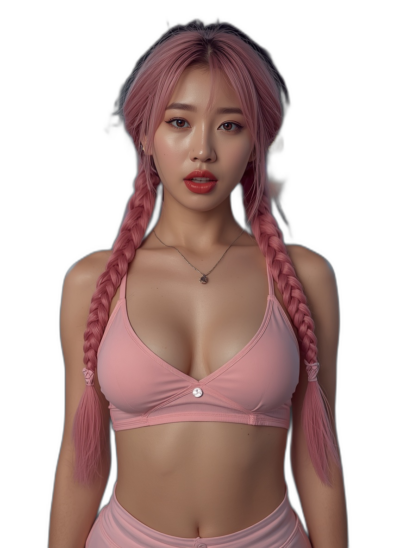
Let’s get the most important thing out of the way first: ThotChat AI is gone. It shut down on December 31, 2025, and has not come back. If you’re searching for it right now because someone recommended it, or because you saw an old review calling it worth your money — you’re too late.
But here’s why this review still matters. Hundreds of other articles are still writing about ThotChat as if it’s a live platform. Some are actively misleading people. This one tells you what the platform actually was, what went wrong, and what you should use instead.
⚠️ Important: ThotChat AI Is No Longer Active
ThotChat AI officially shut down on December 31, 2025. The site stopped functioning around 11 PM EST on that date — no countdown, no announcement, no blog post. Just gone. Users trying to log in the next morning found nothing loading. Social channels went silent. The support email stopped responding in December 2025, and the Discord server went to read-only before going offline entirely.
There has been no return, no relaunch, and no official follow-up statement as of early 2026. If you’re reading this and trying to access ThotChat, save yourself the time — it’s not coming back.
Everything below is a retrospective of what the platform offered before it closed.
Top ThotChat AI alternatives

Build your dream girl from scratch and let her pull you into worlds you didn't know you wanted. She remembers everything, creates the story, and never says no.




Signing Up (When It Still Worked)
Registration was one of ThotChat’s genuine strengths. No long onboarding flow, no personality questionnaires, no credit card upfront. You hit the site, clicked through an age gate confirming you were 18+, and you were in. Start to finish: under 90 seconds.
Age verification was a standard checkbox — no ID scan, no real verification. That was normal for the category.
The platform was web-based with iOS access, no standalone Android app. It ran fine in mobile browsers. The interface was clean and deliberately simple — ThotChat’s whole design philosophy was low friction. Get in, start chatting, figure out the rest later. For most users that worked. It was one of the faster onboarding experiences in the adult AI space.
Billing at signup went through CCBill, which showed up on bank statements as “CCbill.com Thotchat” — worth knowing if you care about discretion.
What You Could Build: Characters and Customization
ThotChat had a solid character setup for its price point. You weren’t getting Seduced AI levels of granular control, but it was more than just picking a preset from a grid.
The character library
The pre-made library had 102 realistic characters and 50 anime characters, covering common ethnicities including Asian, Latina, and Caucasian options for the realistic style. 186+ total pre-made characters at its peak, according to other sources. That’s a decent library — enough variety that you could usually find something close to what you wanted without building from scratch.
Building your own
Custom character creation let you set:
- Appearance — realistic or anime style, body type, hair, face features, skin tone, clothing
- Personality traits — flirty, friendly, dominant, submissive, and variations in between
- Backstory — free-text field for context the AI would reference
- Relationship type — girlfriend, best friend, mentor, fantasy, and other dynamics
- Voice — selectable voice styles for audio messages
The mood toggle system was a nice touch. You could switch your character between different emotional modes mid-conversation — shift from playful to intense, or from casual to dominant — without rebuilding the whole character. It made the chat feel more dynamic than platforms where the personality is fixed after setup.
What was missing: deep per-item clothing customization, multiple image engine choices, or the kind of 8-layer stacking system you’d find on Seduced AI. ThotChat was solid customization, not premium customization.
The Chat Quality: Good When It Worked, Unreliable Near the End
This is where ThotChat’s story gets complicated — because the answer changes depending on when you used it.
During its peak (2024 – mid 2025)
The chat was genuinely good for an uncensored platform at that price. No sudden content-filter interruptions mid-scene. The AI stayed in character reasonably well. Roleplay scenarios from romantic to explicit worked without the AI developing unexpected moral concerns halfway through. Memory tracked your name, preferred scenarios, and relationship status across sessions.
The responses were fast. Real-time conversation felt natural enough. For users who wanted a low-friction, uncensored companion chat, ThotChat delivered that reliably.
Late 2025: Everything Started Breaking
In the final months, users reported severe memory degradation during extended roleplay sessions, forcing them to manually re-input character context repeatedly. Third-party reviews aggregated on “There’s An AI For That” dropped the platform to 3.2/5 stars, with 40.6% giving one-star ratings specifically citing memory lapses.
Features disappeared. Updates stopped. Discord went quiet. Reports described slower responses, higher rates of timeouts, login failures, and entire sessions dying mid-conversation.
The voice feature — once a selling point — deteriorated into robotic, emotionally flat delivery that failed to justify premium pricing.
By the time ThotChat shut down, it was already broken for many users. The December 31 closure wasn’t a sudden death so much as the final step of a long decline.
ThotChat Images and Video: Functional, Not Exceptional
ThotChat had image generation built in. Premium subscribers could request AI-generated images of their companion during chat — and many of the SFW images were free during conversation, which was a user-friendly detail.
Image generation speed ran 15–45 seconds depending on complexity. Resolution went up to 1024×1024 pixels. Character consistency sat at around 87% accuracy across images — meaning the same character looked like themselves in most generations but not all.
Style options covered both realistic and anime. The quality was competent — better than a basic chatbot, not in the same league as a dedicated image platform like Seduced AI. It was enough for the chat context it was built for.
Video generation: minimal. ThotChat was never a video-first platform. Short clips were possible but not the reason anyone chose it over alternatives.
NSFW content was available on paid plans. No persistent content filters on explicit material — that was a core part of the platform’s identity and a deliberate contrast to Character.AI or Replika.
ThotChat AI Voice: A Feature That Promised More Than It Delivered
Voice messages were available — your character could send audio clips as part of a conversation. There was a voice selection system with different styles to choose from.
Real-time voice calls were never ThotChat’s strong suit. The audio quality was described consistently as “decent at first, robotic later.” The voice feature never had the emotional range to match an intense scene. It worked fine for casual audio notes. It was not convincing during anything that required actual emotional performance.
By late 2025, the audio had degraded further. Several reviewers noted it no longer justified its position as a selling point at all.
No voice cloning. No custom voice upload. The selection was fixed and relatively limited compared to platforms like Secret Desires AI’s 18-voice system.
What I Actually Experienced Testing It (Before the Shutdown)
I tested ThotChat when it was still operational and functional — not during the death spiral of Q4 2025.
The first thing that stood out was how fast everything loaded. Other platforms in this category have sluggish generation times, slow chat responses, and constant loading spinners. ThotChat was snappy. That alone made it feel more usable day-to-day.
I built a custom character using the anime style with a specific backstory — a history professor who moonlighted as a competitive card player, generally sarcastic, with a tendency to turn any conversation into a wager. Niche setup. The AI held it surprisingly well for the first two sessions. It referenced the card game angle without prompting a few times. That was a good sign.
Where it broke: session three, the character started forgetting the backstory. By session five it was responding generically — the card game personality was gone, replaced with something that felt like a default “anime companion” template. That memory degradation, which got dramatically worse later in the platform’s life, was already showing up in regular use well before the collapse.
The mood toggle system was the feature I found most useful. Switching emotional register mid-scene without rebuilding the character is something a lot of platforms still don’t do well. On ThotChat it worked cleanly and made conversations feel more flexible.
Most disappointing: the image consistency. Same character, same settings, and the generated images would drift noticeably in appearance. Fine for casual use, frustrating if you care about visual coherence.
The Gem System: Internal Currency That Confused Everyone
ThotChat ran on a Gems currency for premium features alongside the subscription tiers.
Premium subscribers received 1,000 Gems monthly through a combination of monthly bonus and daily allowances. Logging in daily earned 25 bonus Gems. The monthly allocation was meant to cover most casual usage of premium features.
What Gems paid for:
- Image generation (premium quality)
- Voice messages
- Extended memory access
- Higher-tier AI responses
- Premium character unlocks
The system was confusing at first. Gems were separate from your subscription — you could be on a paid plan and still run out of Gems if you generated a lot of images or used voice heavily. Token packs were available as pay-as-you-go top-ups starting at $9.99 for 100 tokens.
The daily login bonus (25 Gems) was a smart retention mechanic — it gave you a reason to check in even on light-use days. But it also made the economics feel more like a mobile game than a subscription service, which some users found annoying.
ThotChat’s confusing Gem system contributed to billing disputes — when users couldn’t predict what a conversation would cost, unexpected charges drove chargebacks. That billing instability was reportedly a factor in the platform losing its payment processor, which is the most likely cause of the shutdown.
Pricing (Historical — Platform No Longer Exists)
These were ThotChat’s active pricing tiers before the shutdown. Listed here for reference, not because you can subscribe:
| Plan | Duration | Price/Month | What Was Included |
| Free | — | $0 | 50 msg/day, 5 pre-made characters, 24hr memory, no image gen |
| Standard | Monthly | $9.99 | Unlimited messaging, 2 characters, 100 msg/day, basic customization |
| Premium | Monthly | $14.99 | Unlimited messaging, full character creation, images, voice, 1,000 Gems |
| Premium | Annual | $9.99/mo | Same as above, billed annually (~$119.88/year) |
Additional token packs were available separately starting at $9.99.
Auto-renewal was enabled on all paid plans. Annual plan subscribers who were mid-cycle when the platform shut down received no refunds, as the support email had stopped responding. That’s the worst-case outcome for any subscription platform failure — and it’s a lesson that applies to any newer platform in this space.
The pricing was competitive. $14.99/month put it below most comparable platforms. The value was real when the platform worked. It wasn’t real in the final months.
Was It Worth Paying For?
When the platform was healthy: yes, especially at the Standard price point. $9.99/month for solid uncensored chat with decent customization and fast responses was competitive value. Casual users could stay on free with 50 messages a day and actually get a feel for the platform before committing.
Where the paywall hit: image generation required Gems even on paid plans, and the free tier’s 24-hour memory made any kind of ongoing relationship-building impossible.
The underlying value proposition was right. Low price, solid chat, flexible character setup, no filter annoyances. The execution started failing long before the final shutdown.
Red Flags (That Turned Out to Be Warning Signs)
Looking back, several things that seemed like minor annoyances were actually signals:
- No official company information — ThotChat never published corporate ownership details or registered business information. Anonymous operation in this category is a risk factor.
- Confusing Gem system drove billing disputes — chargebacks spiked in Q3 2025, which is likely what triggered payment processor issues
- Memory degradation started months before shutdown — what looked like a bug was actually a sign of deteriorating infrastructure
- Communication went quiet — Discord slowed, then stopped; no product updates; no response to user reports
- No data export tool — ThotChat’s privacy policy stated data would be retained as long as your account was active. There was no shutdown clause and no way to export conversations. When the service stopped, everything became inaccessible.
- Annual subscribers lost their money — no refunds were processed for people mid-cycle at shutdown
How It Compared to Competitors (While It Existed)
Candy AI uses transparent subscription tiers ($8.99–13.99/month) with stable billing and no hidden token drains. Unlike ThotChat’s confusing Gem system, what you pay is what you pay. Candy AI also has better long-term memory and encrypted conversations. ThotChat was cheaper and faster to onboard.
Replika is built around emotional wellness and long-term companionship with strong cross-session memory. ThotChat was never trying to be that — it was explicit-first with lighter emotional architecture. If persistent memory and emotional continuity mattered to you, Replika was always the better choice for that specific need.
ThotChat AI Pros & Cons
Pros (what worked when it worked):
- Fast onboarding — under 90 seconds from landing page to first chat
- Competitive pricing at $9.99–14.99/month
- No content filter interruptions during roleplay
- Mood toggle system let you shift character tone mid-conversation
- 186+ pre-made characters with realistic and anime options
- Daily Gem bonus rewarded regular users
- Free tier had 50 messages/day — generous enough to evaluate properly
Cons (real problems, not nitpicks):
- Memory degradation started well before the shutdown — not a late-stage bug
- Image consistency was unreliable, especially across sessions
- Voice quality was flat and never matched the emotional tone of good text sessions
- Gem system was confusing and drove unexpected charges
- No company transparency — no public ownership, no corporate identity
- Annual subscribers lost money at shutdown with no refunds
- All user data became inaccessible when the site closed — no export option
Verdict
5/10 — and that’s being fair to what it was during its healthy period.
ThotChat AI was the right choice for users who wanted uncensored AI companion chat at a low price with fast performance — and the wrong choice for anyone who built a long-term investment in their characters, paid for an annual plan, or expected the platform to still exist six months later.
The shutdown is not a minor footnote. It is the single most important thing about ThotChat AI in 2026. If you’re looking for what ThotChat offered, Candy AI and Secret Desires AI are the most direct functional replacements — both have been running since 2023 and 2024 respectively, both have real corporate registration, and neither disappeared overnight.
Don’t pay annual plans on newer platforms in this space. Lesson learned.